Plate Tectonics study song
Quick answer
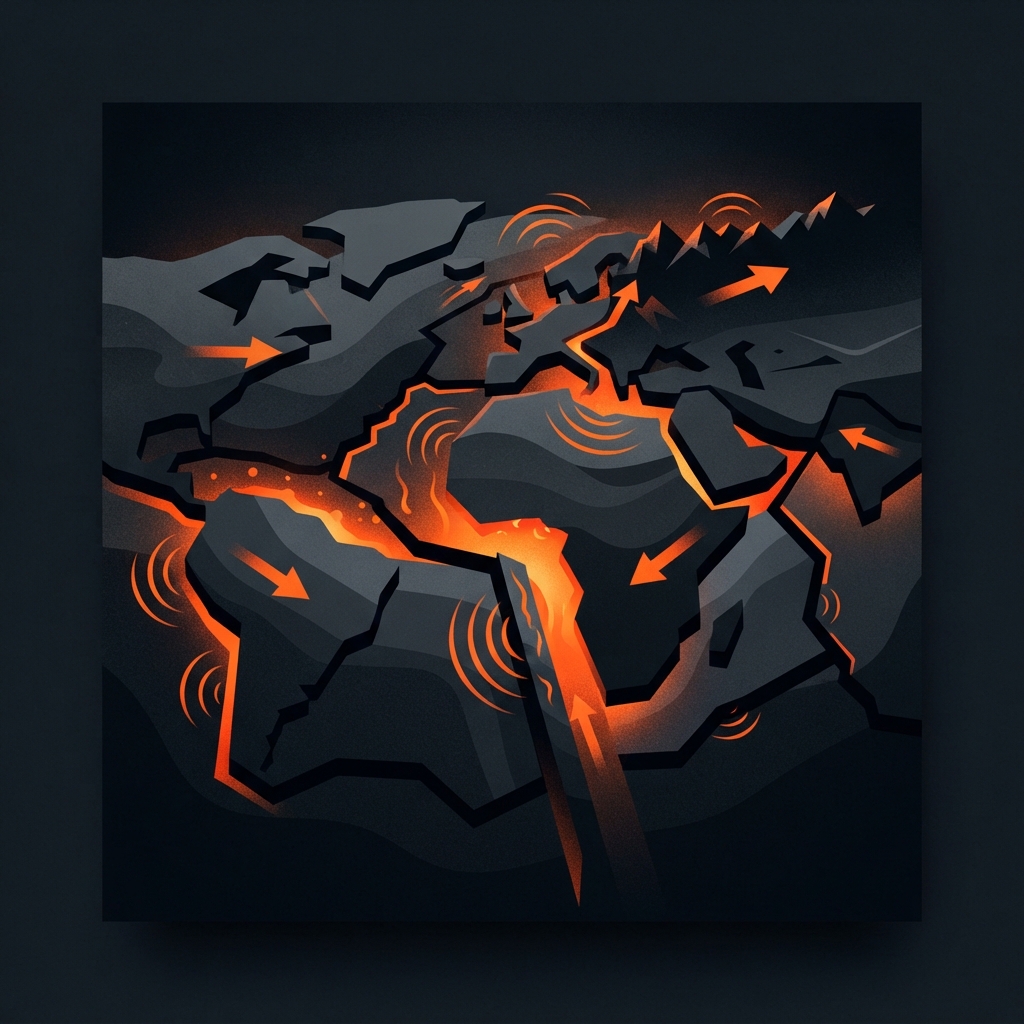
Plate tectonics explains why continents drift, mountains rise and earthquakes strike. The lithosphere is broken into rigid plates that float on the hotter, softer asthenosphere, and their edges meet in three ways: moving apart, colliding or sliding past one another.
Exam questions usually ask you to name the boundary type, describe what happens there and give an example such as the Mid-Atlantic Ridge or the Andes. Mixing up constructive and destructive margins is the classic lost mark. A song helps because each boundary has a short fixed script of movement, landform and hazard, and a rhythm lets you replay that script without hunting for the words.
5 facts to know about plate tectonics
- 1At a divergent (constructive) boundary plates move apart and new crust forms, as at the Mid-Atlantic Ridge.
- 2At a convergent (destructive) boundary an oceanic plate is subducted beneath a continental plate, producing deep ocean trenches and volcanoes.
- 3At a transform (conservative) boundary plates slide past each other, as along the San Andreas Fault in California.
- 4The Himalayas formed where the Indian plate collided with the Eurasian plate, which is a continent-continent collision.
- 5Alfred Wegener proposed continental drift in 1912 and called the ancient supercontinent Pangaea.